
For China & SE Asia Tours:
+86 156 9210 9030For Portland Tours:
+1 (503) 409-5593
We’d Love to Hear From You!
We’ll get back to you in less than 24 hours, 7 days a week. We promise.
This article is part of our Founder Series, a collection of articles written by Lost Plate’s founder Ruixi Hu. These articles share stories about her journey building Lost Plate to what it is today, and the memories that she has collected over the years.
In the spring of 2020, the world slowed down, but my mind did not. Like so many others in China’s travel industry, Lost Plate’s food tours came to a sudden halt when the pandemic closed borders. With no international guests, no tours, and no idea when things would return to normal, I found myself asking the same question as everyone else: what now?
For years, I had been too busy running our growing business to explore my own backyard. The pause gave me something rare: time. I knew that expats in China were suddenly grounded, unable to leave but still eager to travel. If they couldn’t use their PTO to go abroad, why not help them explore China more deeply through food? That idea became the seed for Lost Plate’s first multi-day trips. But before we could launch anything, I needed inspiration. So I packed up our car and drove to Yunnan.
Yunnan was always on my list. A place whispered about by chefs and food lovers for its biodiversity, ethnic diversity, and mix of Himalayan highlands and tropical lowlands. But nothing prepared me for what I found there, in the landscapes and markets alike.
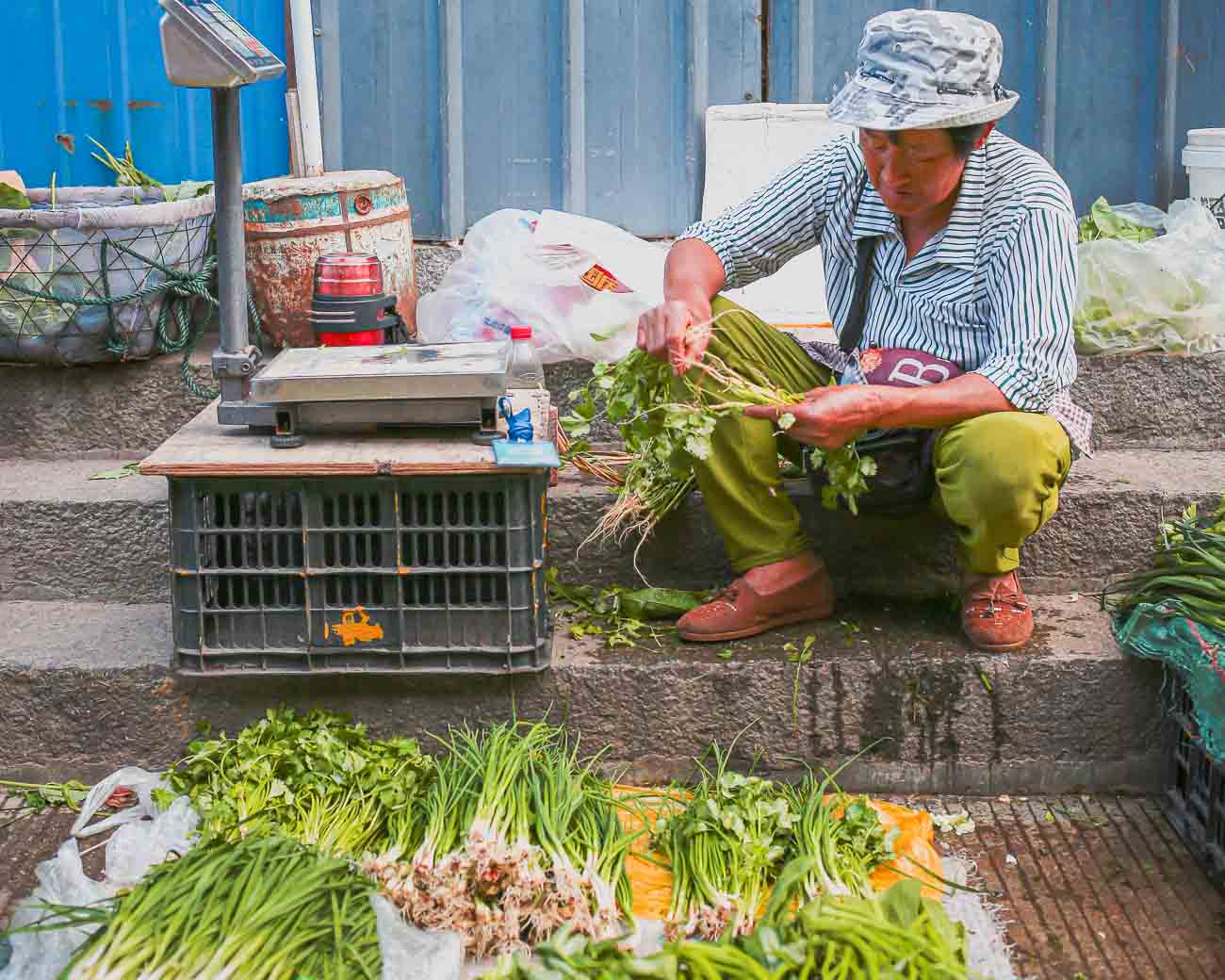
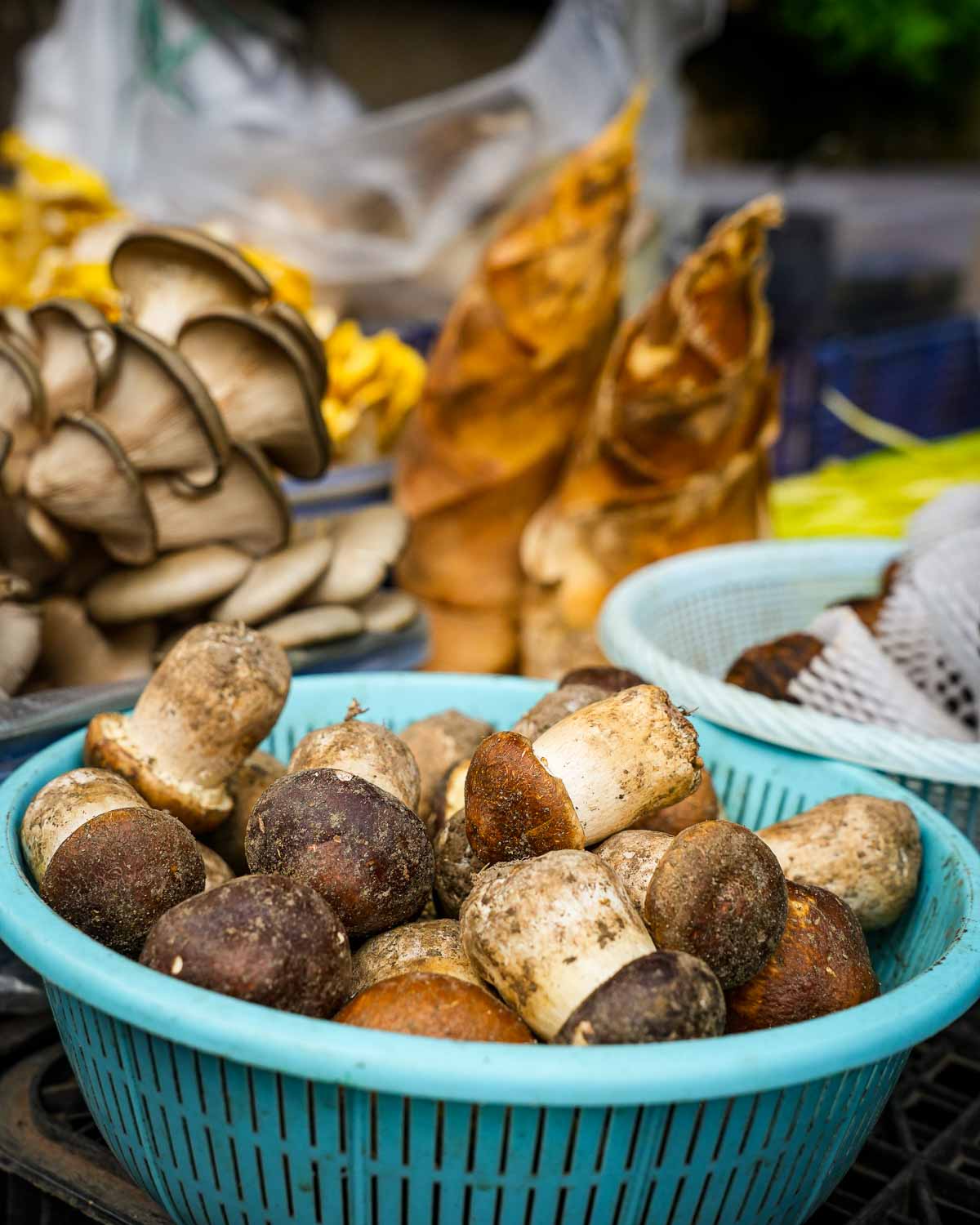
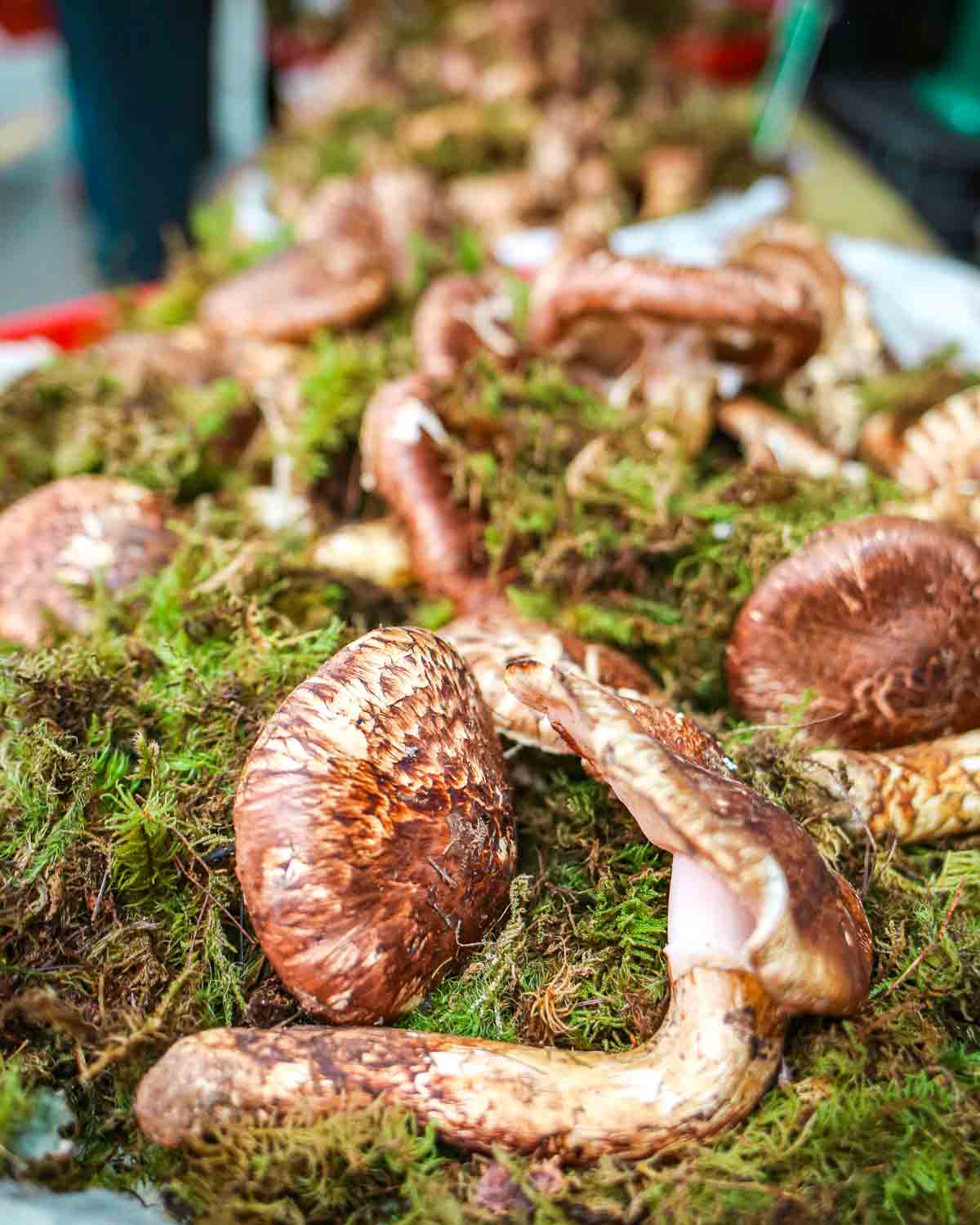
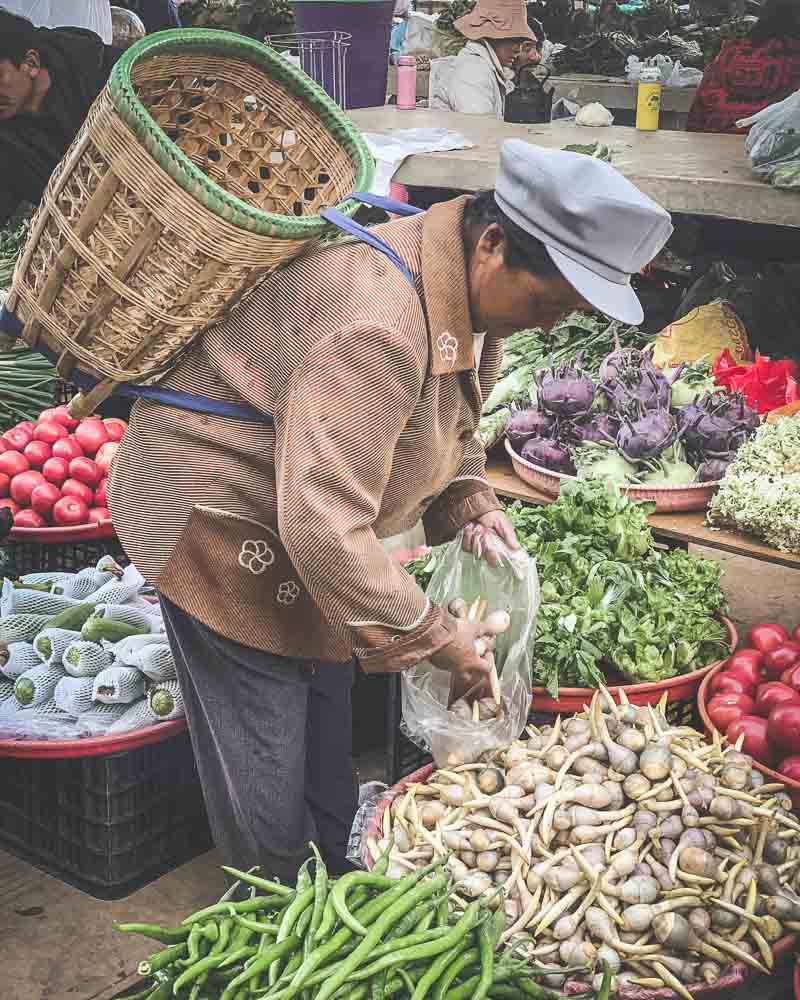
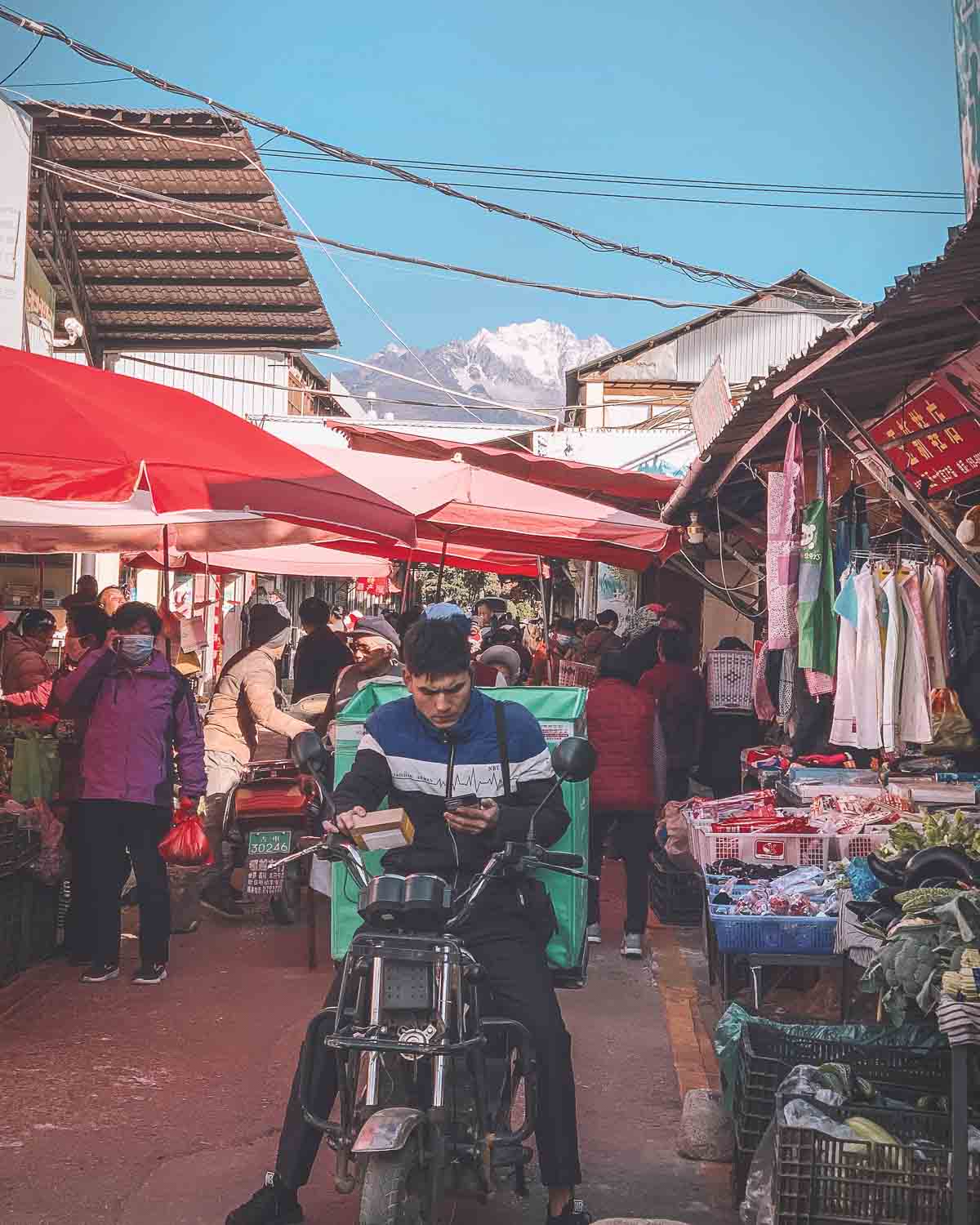
Each city we passed through – Dali, Lijiang, Shangri-La – had its own rhythm, its own smells. But the markets were always the loudest. They weren’t tourist attractions; they were kitchens without walls, where bubbling pots of broth steamed beside wicker baskets of wild mushrooms still covered in forest soil. Here, herbs didn’t come in little bags; they came tied in bunches, still dripping with morning dew. The clatter of cleavers on chopping blocks mixed with the shouting of prices and greetings in dialects I didn’t understand.
It wasn’t long before I realized that these markets weren’t just about food. They were alive. A conversation. A stage. A memory passed down through ingredients.


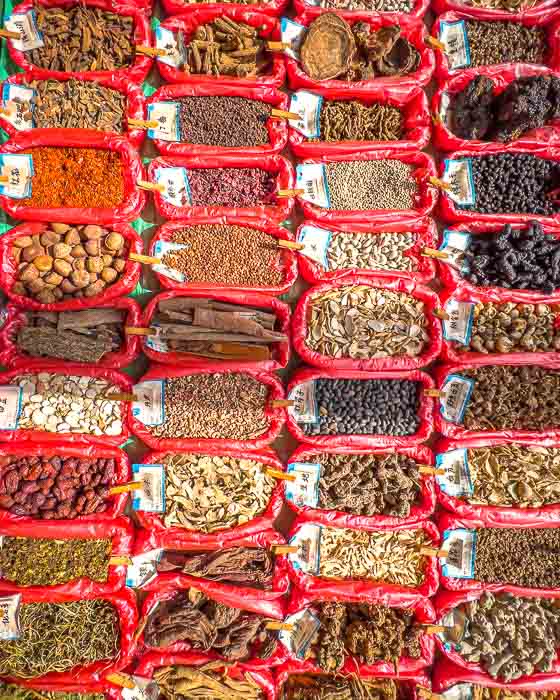
The ingredients were unlike anything I’d seen growing up in Sichuan or while building our tours in Beijing. Vendors could identify dozens of types of mushrooms at a glance, some delicate and floral, others earthy and meaty. There was highland barley ground into coarse flour, smoked cheeses made from yak milk, pickled ferns, and tiny, numbing peppercorns that weren’t quite Sichuan but still packed a punch.
Then there was Mr. Li, a weathered man from a village near Shaxi. He’d arrive at the market just after sunrise with handwoven baskets filled with mushrooms and wild herbs gathered before dawn. His knowledge was encyclopedic, whispered almost conspiratorially as he pointed out the subtle differences between safe, delicious varieties and their toxic look-alikes, or explained which fern tips were tenderest that week. He wasn’t just selling; he was sharing a deep, generations-old connection to the mountains.


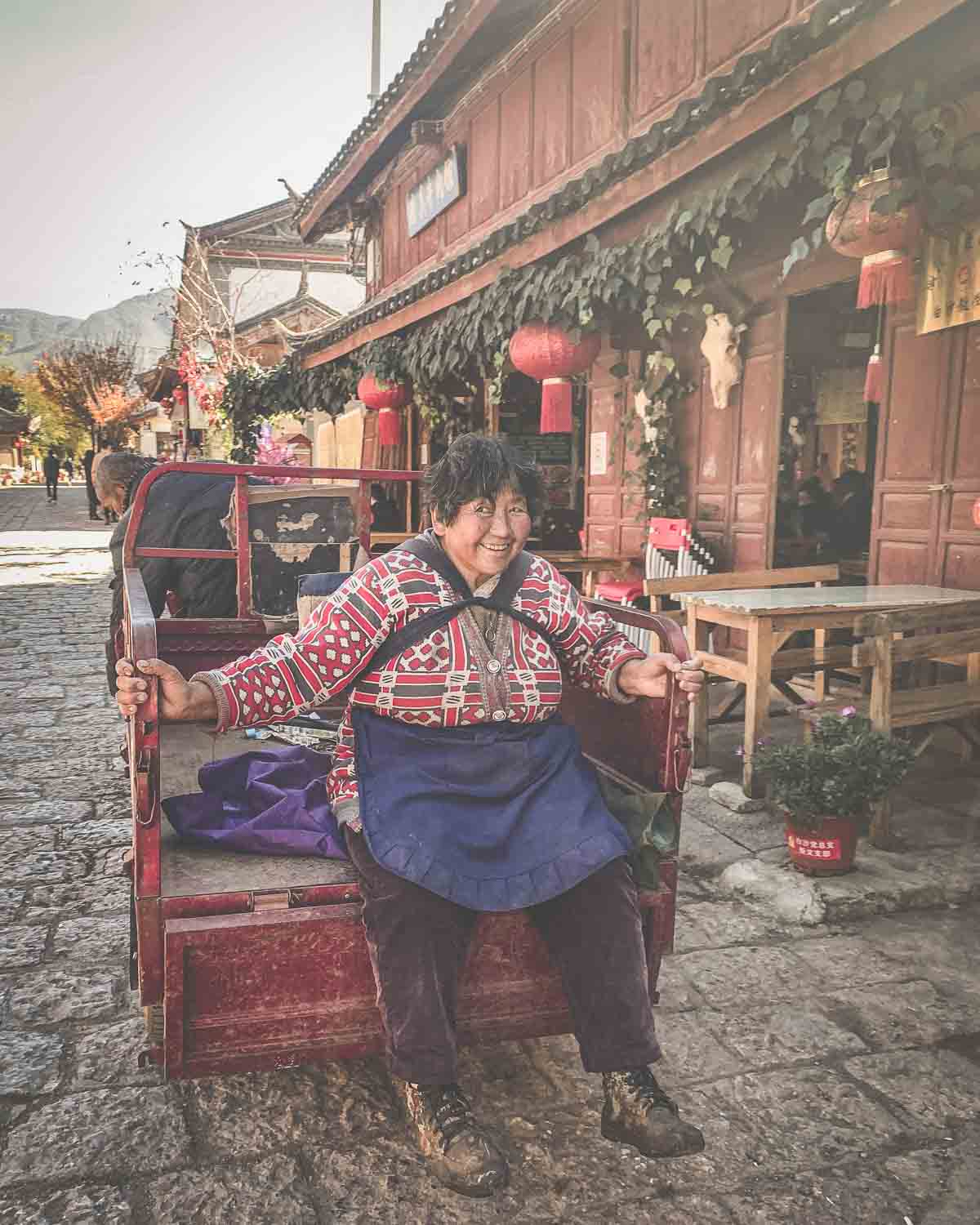
There was the breakfast stall auntie in Dali who made fried goat cheese with sticky rice sesame balls and served it in bowls of warm fermented rice perfumed with rose jam. She learned our order after just two visits and always greeted us like family, even as lines grew behind us.
Just around the corner, a small BBQ shop came alive, run by another auntie who manned the grill with quiet confidence. Everyone sat crowded around her, sharing the warmth of the fire and the easy rhythm of conversation. She grilled tofu and sweet potatoes, slowly, carefully, one batch at a time. In front of her was a tray of corn kernels. Each time you reached over to pick up a piece, she’d silently drop a few kernels into your group’s little pile. No one said a word about it, but at the end, the total was counted and your bill calculated. We ate, drank, and laughed together with strangers who didn’t feel like strangers. For a moment, it didn’t feel like we were visiting, it felt like we belonged.
In Shangri-La, it was a yak butcher who became our unlikely culinary mentor. His shop was small, tucked behind the main square, where deep-red yak cuts hung beside bundles of dried herbs. He would wave us in as we walked by and offer thick slices of dried yak meat to chew on, always with a lesson: how to braise yak ribs with cardamom and barley wine, how to simmer tougher cuts until they fell apart in a stew. “Don’t rush the yak,” he warned us once, wagging a cleaver for emphasis. “It needs mountain time.”
As my trip stretched from one week to three, it became clear: this wasn’t just research. This was the tour.
Each place we stopped became a chapter in a story we knew our guests would want to hear. Not because it was curated, but because it was real. Our future guests might not meet the breakfast or BBQ shop aunties, but they would eat their food. They would taste what we tasted. They would understand, through a bite of stir-fried ferns or a spoon of barley porridge, what makes this region sing.
Since then, we return every year. Not just to run tours, but to reconnect. To wander the same markets and greet familiar faces. Because these aren’t just supply chains. They’re relationships — the soul of what we do. They remind us that food tourism isn’t about following a script. It’s about listening to the stories that bubble up from the wok, the forest floor, the early morning chaos of the market, sharing them bite by bite.
Join us on our 8-day Dali to Lijiang journey and experience it for yourself — from mountain villages to fresh foraged mushroom hot pot, from street markets to family kitchens, where every stop has a story worth tasting.

Some meals are about flavors. Others are about memory. And sometimes, if you’re lucky, a meal becomes a doorway into someone else’s world, where stories and laughter matter just as much as the food on the plate. That’s exactly what I found in a small village outside Yangshuo, where I sat down to one of the most unforgettable meals of my life. But this wasn’t a restaurant in the usual sense. It was someone’s actual home.

Ask any Shanghainese person, “What does Shanghai taste like?” and you’ll likely hear about its rich, soy-infused cuisine, a steaming bowl of scallion oil noodles, or perfectly crisp Shengjianbao. But one dish that truly captures the essence of the city’s food culture is “Baoyu,” or Shanghai-style fried fish.

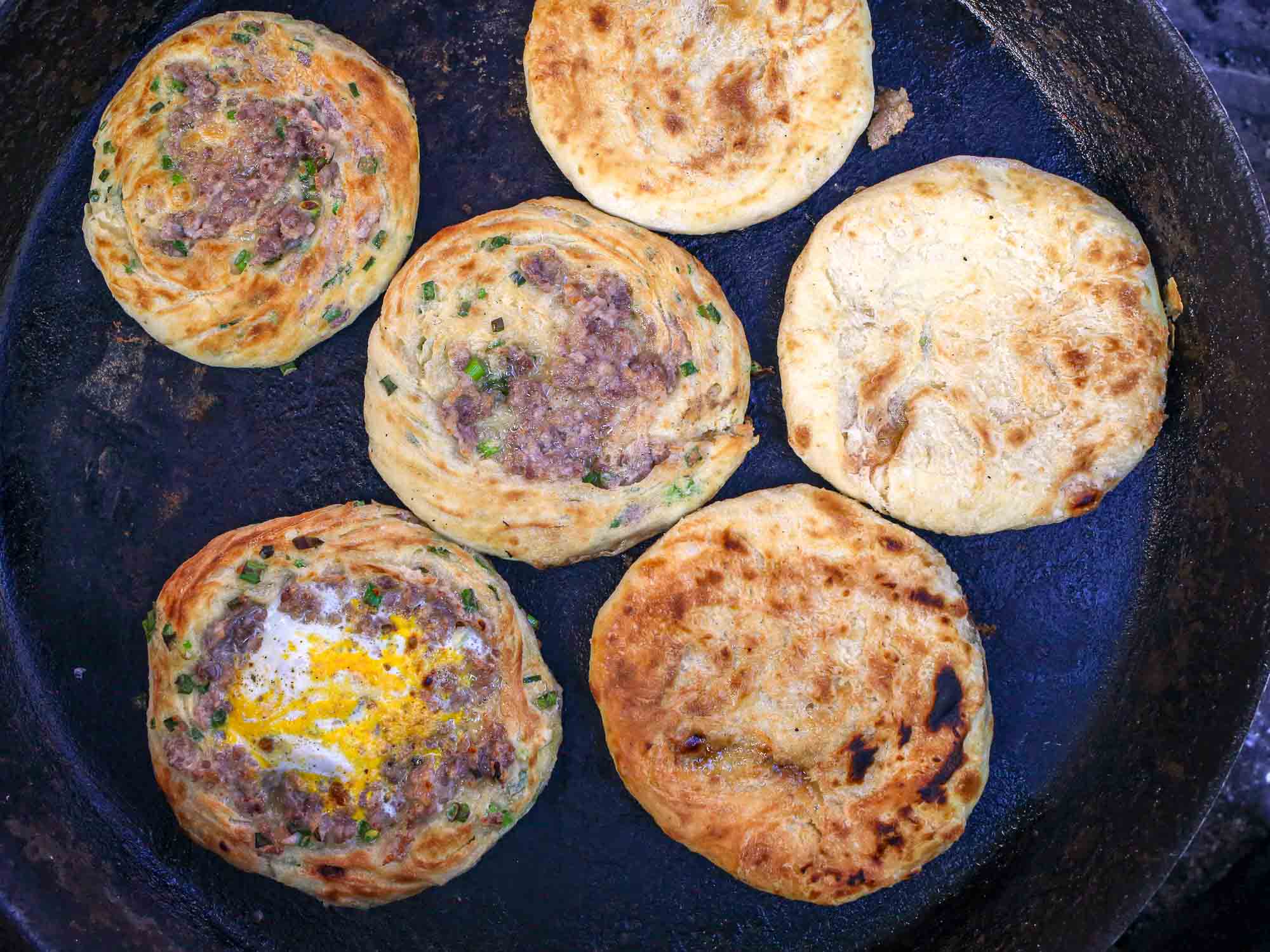
In the heart of Xizhou, a small town by Yunnan’s Erhai Lake, the scent of baking bread drifts through the air. Inside a modest, flour-dusted bakery, Mr. and Mrs. Yang stand over a charcoal-fired oven, their hands moving with quiet precision – just as generations before them have done. This is the home of a century-old tradition: Xizhou Baba.
You know the drill. Cookies store and/or access your device information so we can process data such as browsing behavior. Not consenting may adversely affect your experience while using this site.