
For China & SE Asia Tours:
+86 156 9210 9030For Portland Tours:
+1 (503) 409-5593
We’d Love to Hear From You!
We’ll get back to you in less than 24 hours, 7 days a week. We promise.
This article is part of our Founder Series, a collection of articles written by Lost Plate’s founder Ruixi Hu. These articles share stories about her journey building Lost Plate to what it is today, and the memories that she has collected over the years.
YANGSHUO, China — Some meals are about flavors. Others are about memory. And sometimes, if you’re lucky, a meal becomes a doorway into someone else’s world, where stories and laughter matter just as much as the food on the plate.
That’s exactly what I found in a small village outside Yangshuo, where I sat down to one of the most unforgettable meals of my life. But this wasn’t a restaurant in the usual sense. It was someone’s actual home.
I first heard about it from a friend who said, “There’s a family that makes niang dishes so good, people book a week ahead just to eat in their courtyard.” Curious, I set off down a dusty lane lined with pomelo trees and stray chickens pecking at the roadside. When I arrived, I almost walked past it: a simple family yard gate, a few bamboo chairs scattered under a tree, and a warm, quiet hum coming from the kitchen.
The husband used to be the village secretary. He was famous for his hospitality, always inviting neighbors over for meals, filling his courtyard with laughter and the clink of chopsticks. His wife cooked from her heart, using old family recipes that made friends tell her over and over, “You should open a restaurant.” When he retired, she finally listened. But instead of building something new, she simply kept the doors open. The living room became the dining room. The courtyard stayed just as it was. Nothing felt staged.
I felt more like an old friend than a guest. We shared tea first, and I watched her prepare the last touches in the kitchen, her hands moving confidently, almost like a dance she had done thousands of times before.


That day, we had come for something special: niang dishes (酿). In Yangshuo, niang cooking is a kind of quiet poetry. One ingredient folds into another, transforming simple vegetables or river snails into tiny, surprising treasures.
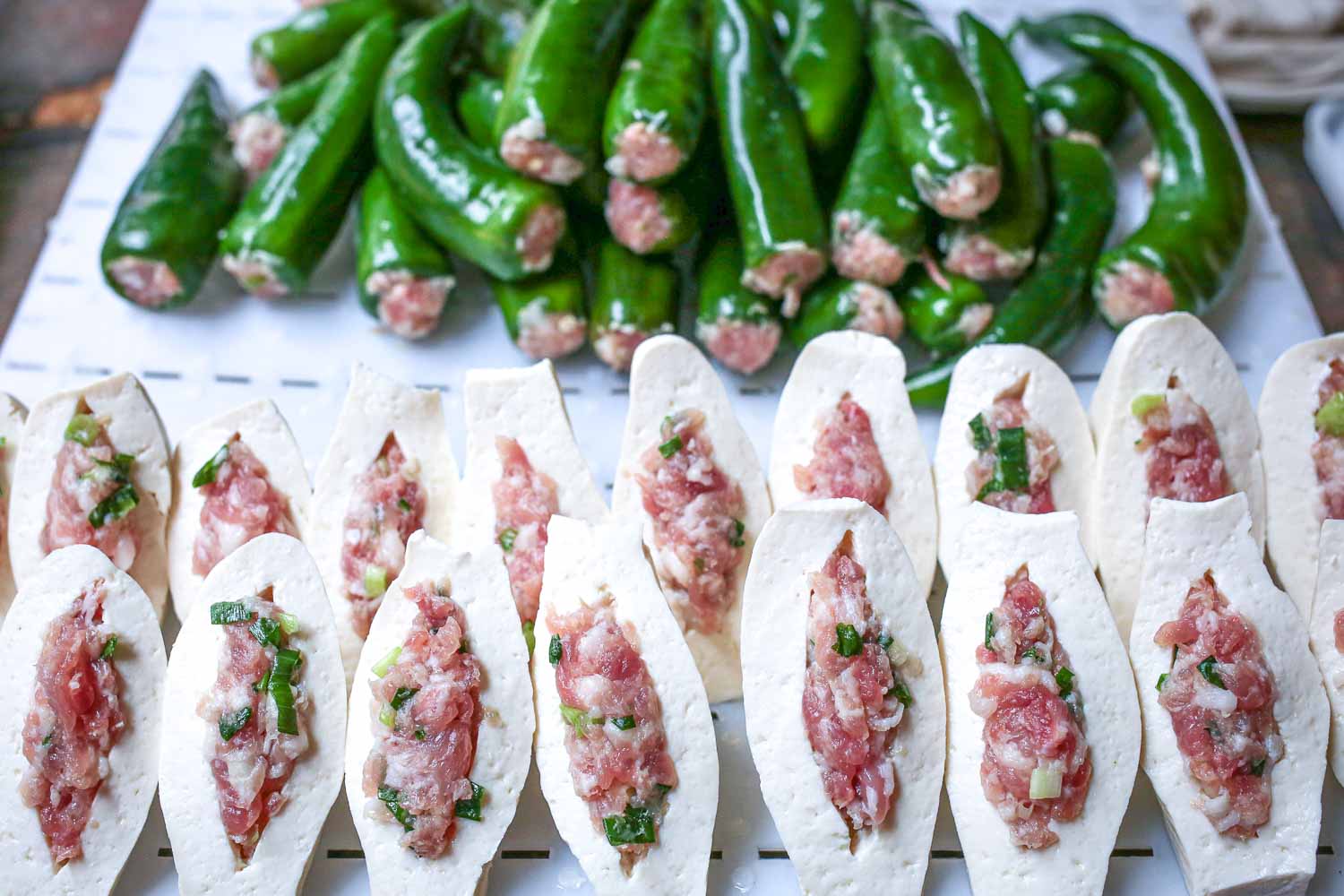
The tradition traces back to the Hakka people, who came south from China’s Central Plains. Missing dumplings and lacking wheat flour, they started stuffing whatever they could find: tofu, eggplants, bitter melon, even bamboo shoots and pomelo peel. Each stuffed piece carried a story of adaptation and creativity.
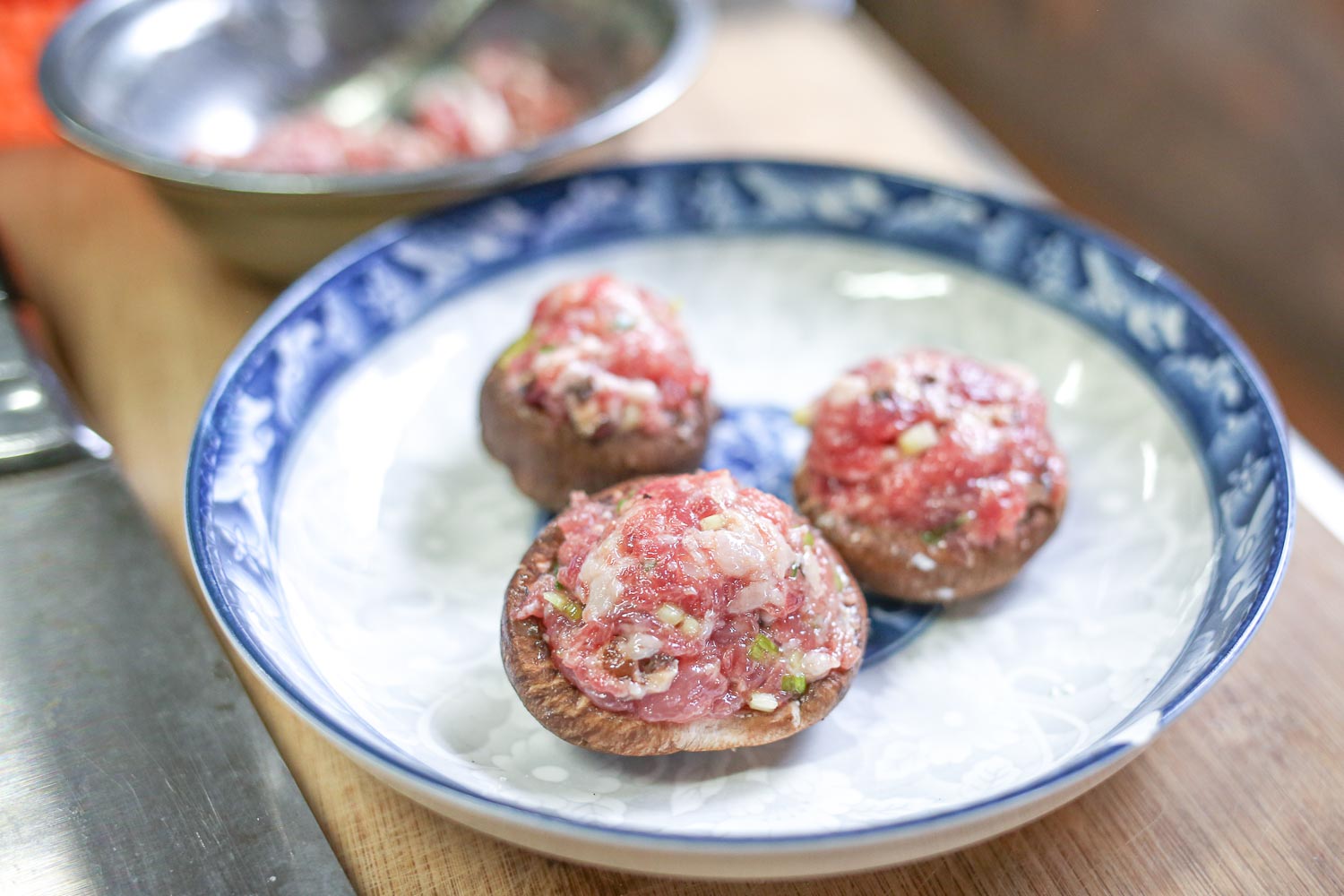
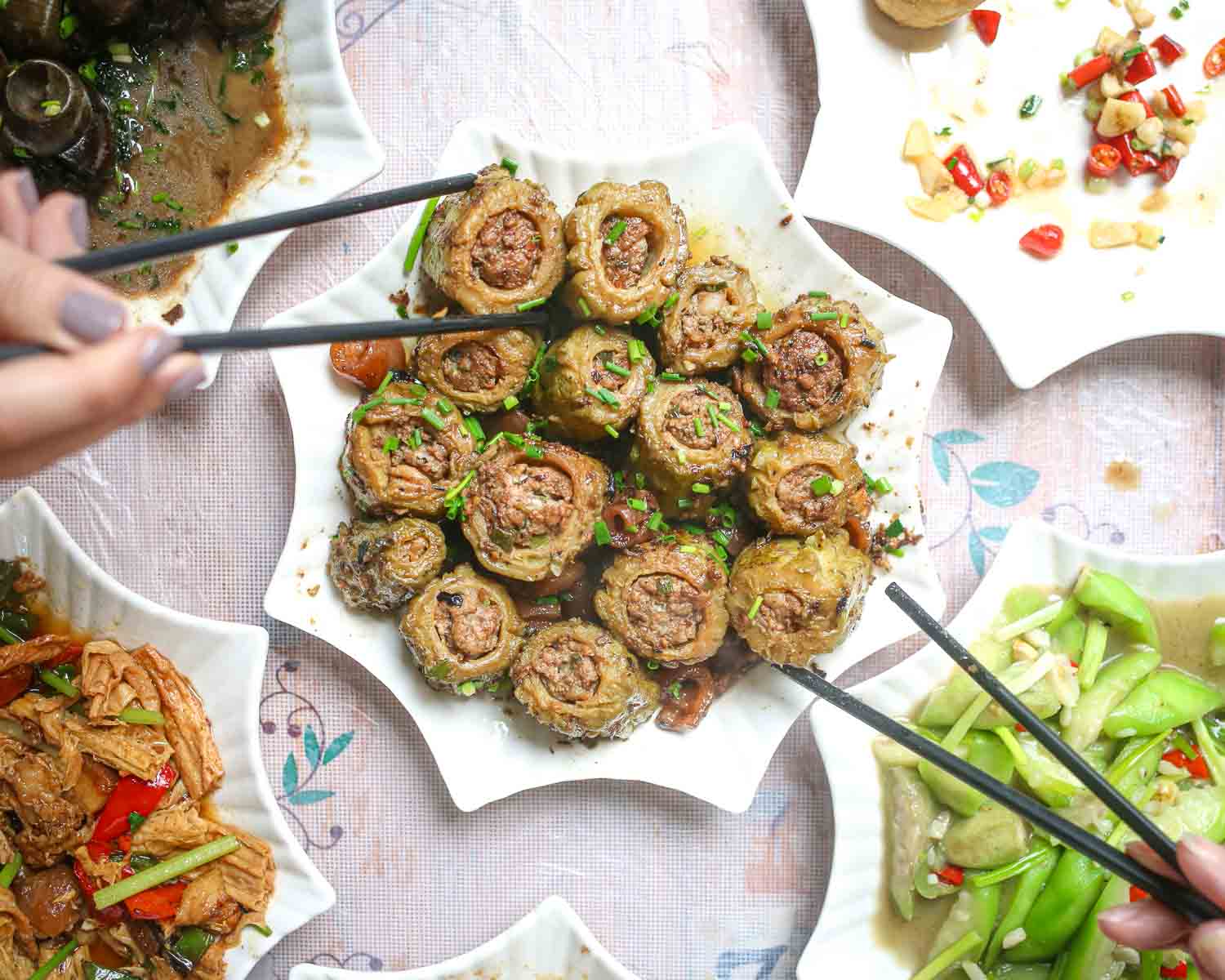
At this table, I felt like I was tasting chapters from someone’s life. There were tofu blocks stuffed with minced pork and herbs, bitter melon rings filled so precisely they looked like small sculptures, and eggplants packed until they nearly burst.
And then there were the snails.


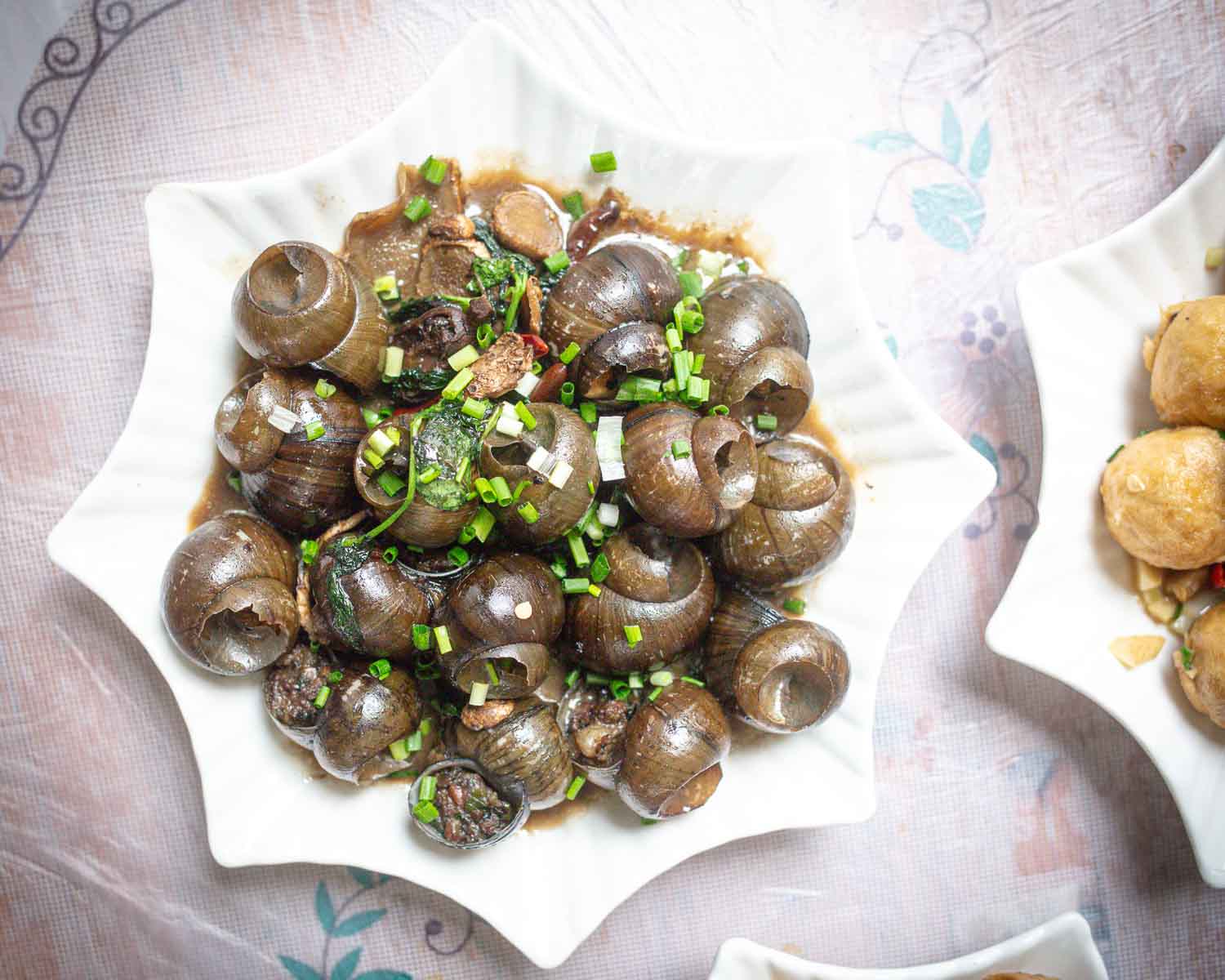
I’d heard of stuffed snails (Tianluo Niang, 田螺酿) before, but I had never really understood how much work went into them until I saw it up close.
The snails, pulled from local rice fields, had been soaked in fresh water for two days to clean them fully. Each one had been scrubbed by hand, blanched, and carefully trimmed. The snail meat was then minced and mixed with pork, fresh mint, and water chestnuts for crunch. Everything was bound together with cornstarch, seasoned just enough to bring out every note.
As I watched her stuff each shell, I felt a kind of reverence. It was almost like she was writing a letter to each guest, a personal note of care and patience.
When I finally tasted it, I had to close my eyes for a moment. Chewy snail meat, tender pork, that sudden sweet crunch of water chestnut, and a bright hint of mint. Each bite felt alive, a quiet celebration of place and season and family.
As more dishes arrived, the courtyard filled with a soft, easy energy. There was no menu, no rush. Just the warmth of a home that has always been open, and the sense that you were exactly where you needed to be.
This isn’t the Yangshuo you see from a raft on the Li River or through the window of a tour bus. This is a Yangshuo you feel through your fingertips as you try (and fail) to fold eggplant the right way, through small toasts of local rice wine, and in the gentle clatter of bowls being cleared under moonlight.
I left that night with a full belly and the rare feeling that I had been let into someone’s story.
At Lost Plate, I believe travel should be about connection, not just checklists. That’s why this meal, in a real family’s home, surrounded by their laughter and history, is part of our Guilin & Yangshuo 4-day itinerary.
Because some flavors can’t be packaged or replicated. They live in the hands that make them and the stories that hold them together.

In the spring of 2020, the world slowed down, but my mind did not. Like so many others in China’s travel industry, Lost Plate’s food tours came to a sudden halt when the pandemic closed borders. With no international guests, no tours, and no idea when things would return to normal, I found myself asking the same question as everyone else: what now?

Ask any Shanghainese person, “What does Shanghai taste like?” and you’ll likely hear about its rich, soy-infused cuisine, a steaming bowl of scallion oil noodles, or perfectly crisp Shengjianbao. But one dish that truly captures the essence of the city’s food culture is “Baoyu,” or Shanghai-style fried fish.

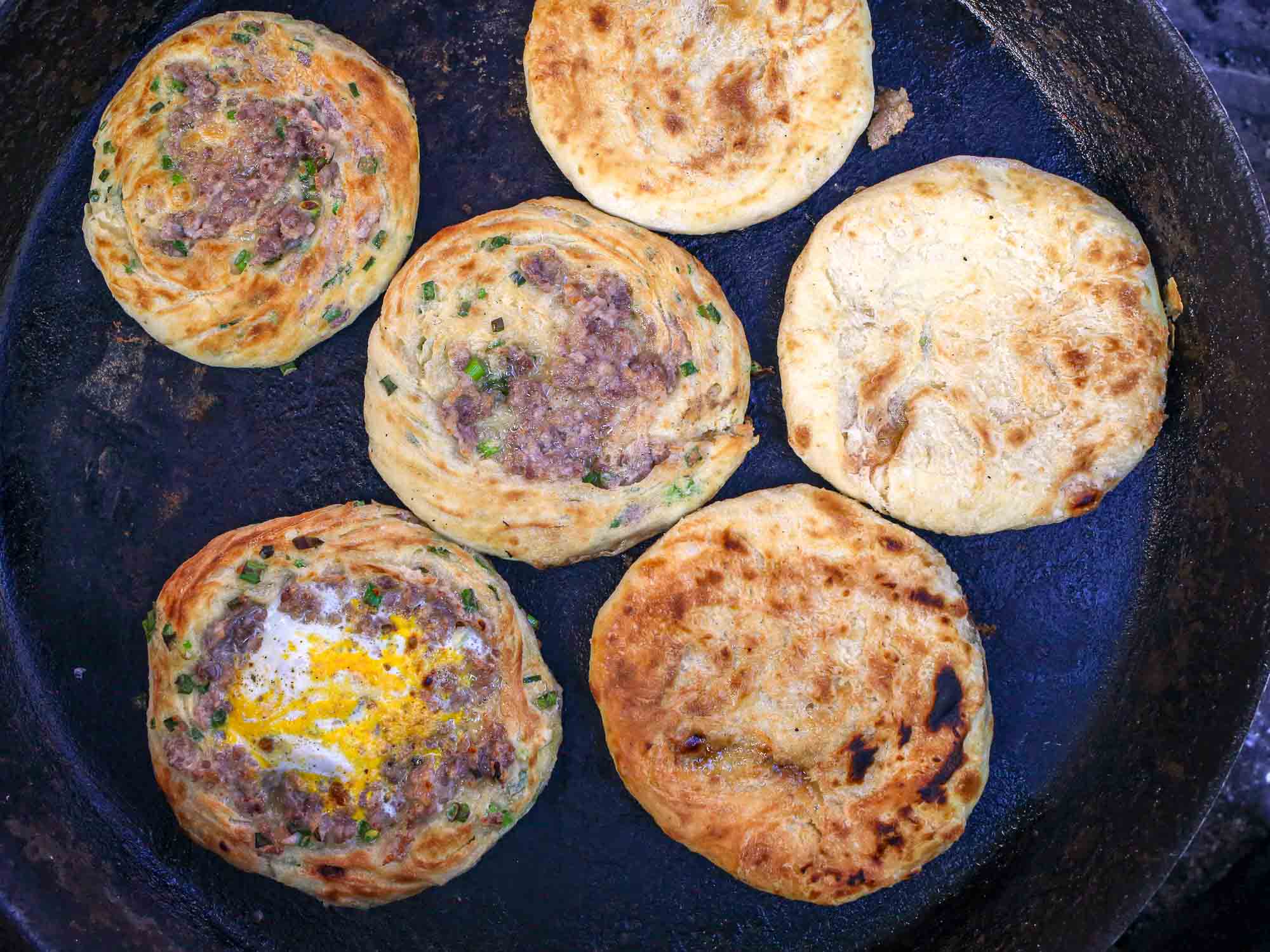
In the heart of Xizhou, a small town by Yunnan’s Erhai Lake, the scent of baking bread drifts through the air. Inside a modest, flour-dusted bakery, Mr. and Mrs. Yang stand over a charcoal-fired oven, their hands moving with quiet precision – just as generations before them have done. This is the home of a century-old tradition: Xizhou Baba.
You know the drill. Cookies store and/or access your device information so we can process data such as browsing behavior. Not consenting may adversely affect your experience while using this site.