


For China & SE Asia Tours:
+86 156 9210 9030For Portland Tours:
+1 (503) 409-5593
We’d Love to Hear From You!
We’ll get back to you in less than 24 hours, 7 days a week. We promise.
This article is part of our Founder Series, a collection of articles written by Lost Plate’s founder Ruixi Hu. These articles share stories about her journey building Lost Plate to what it is today, and the memories that she has collected over the years.
GUILIN, China — You hear about Guilin long before you arrive. People talk about its karst mountains as if they’re from another planet, the kind of scenery that makes poets put down their brushes and just stare. But what they don’t tell you is that beyond the famous viewpoints and crowded boat docks, there’s a quieter world waiting if you’re willing to slow down and listen.
That’s what I came here to find. Not the usual bus tour snapshots, but an adventure stitched together from small, unexpected moments you only collect when you take the long way around. With Lost Plate, I designed a multi-day itinerary that strings together Guilin and Yangshuo like beads on a silk thread, equal parts elegance and adventure. It’s for travelers who want to move, breathe, and taste deeply.


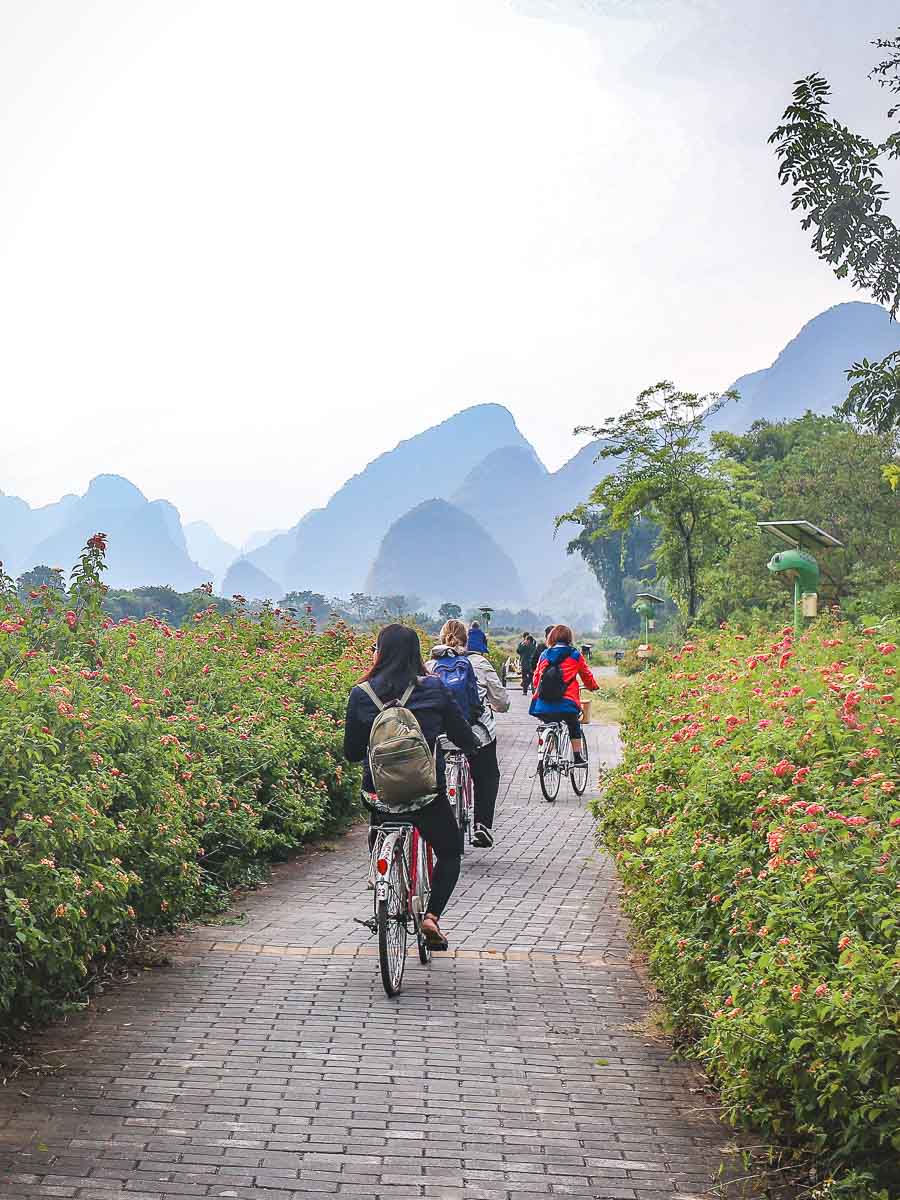
We start on bicycles, rolling past fields so green they look almost painted. Farmers in straw hats glance up and nod as we pass, while the air smells faintly of wet earth and woodsmoke. Cycling here isn’t about logging kilometers. It’s about drifting through villages, hearing roosters crow, and catching snatches of conversation in dialect as people sort vegetables by the roadside.
Then we swap our bikes for a vintage sidecar motorcycle. There’s a quiet thrill to leaning into a curve with the wind in your face, children laughing and running alongside, and the sudden scent of blooming osmanthus trees hitting you out of nowhere.
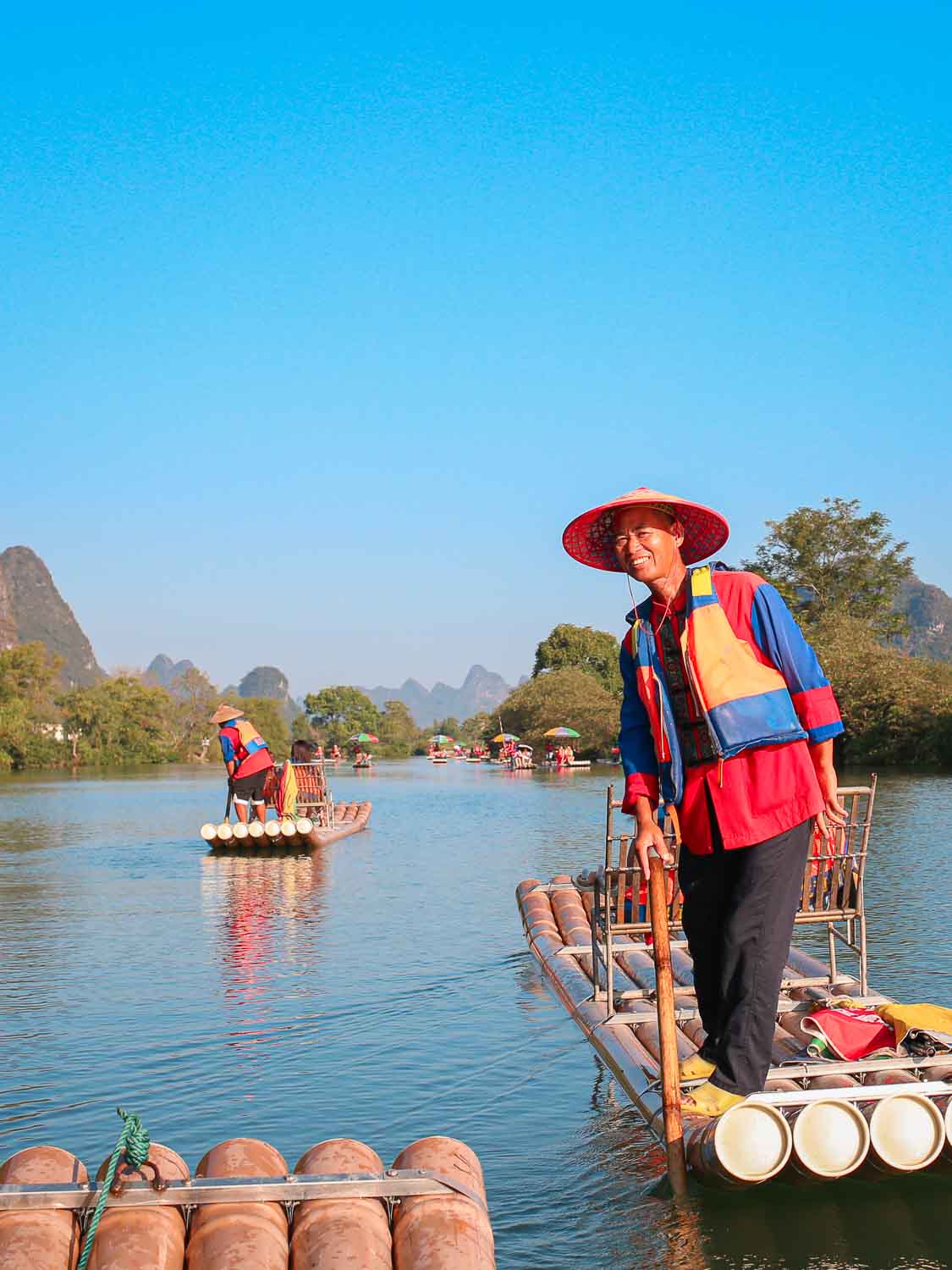
On the Li River, we trade asphalt for water. A bamboo raft floats us past limestone towers that look like giant brushstrokes against the mist. Fishermen drift by, birds wheel overhead, and the world feels like an ink painting coming to life in slow motion.
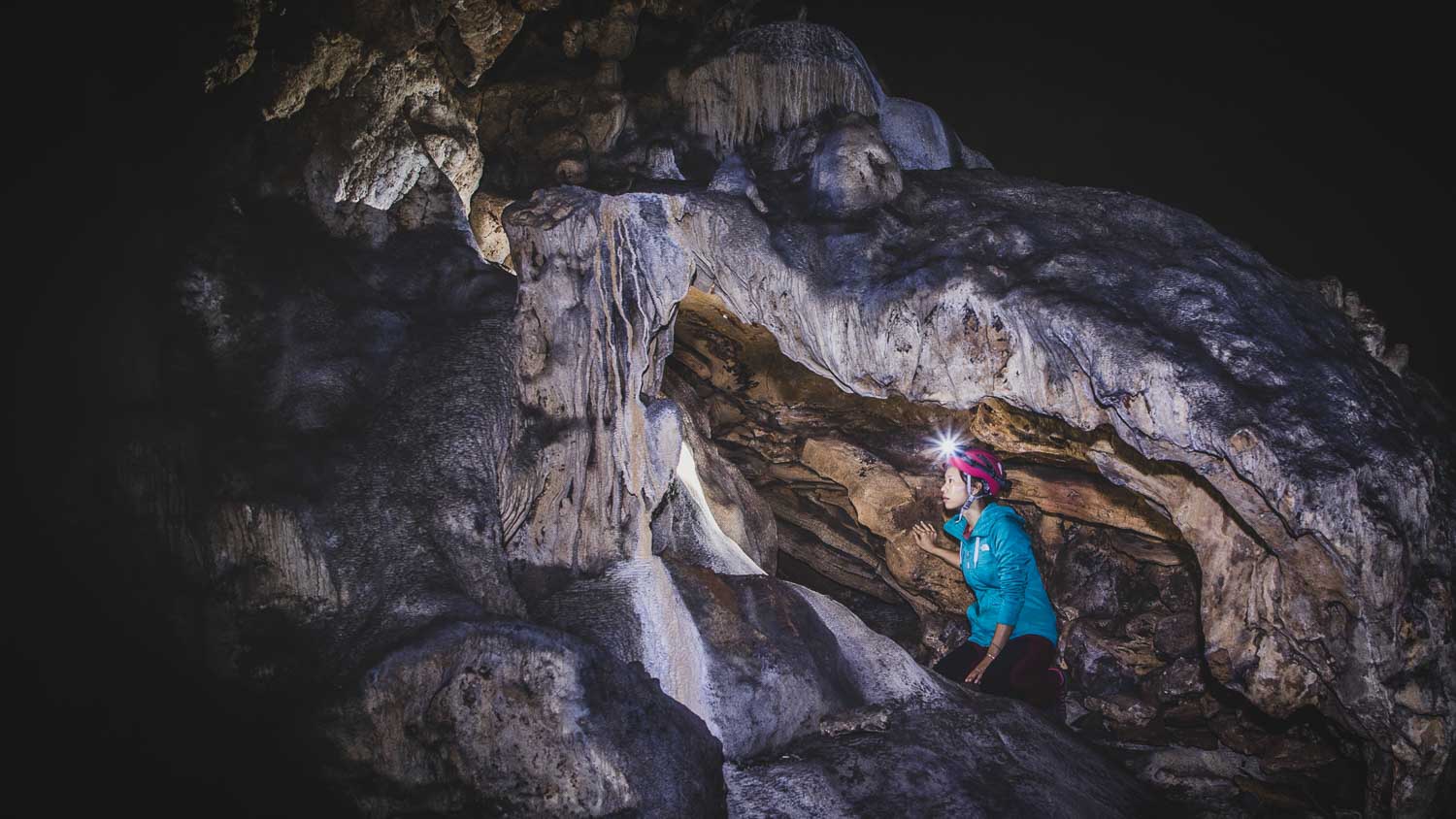
But the real surprise waits below ground. Yangshuo and its surroundings hold more than 1,000 caves, carved out by water over millions of years. Some were used for weddings, others sheltered soldiers during wartime. Instead of neon-lit tourist caves with smooth walkways and staged lighting, we crawl into a wild cave that feels untouched, muddy, alive. Headlamps bob in the darkness as we squeeze through stone corridors and marvel at cathedral-like chambers shimmering with hidden pools. Down there, you feel time dripping slowly around you, a reminder that true wonder lives beyond the surface.
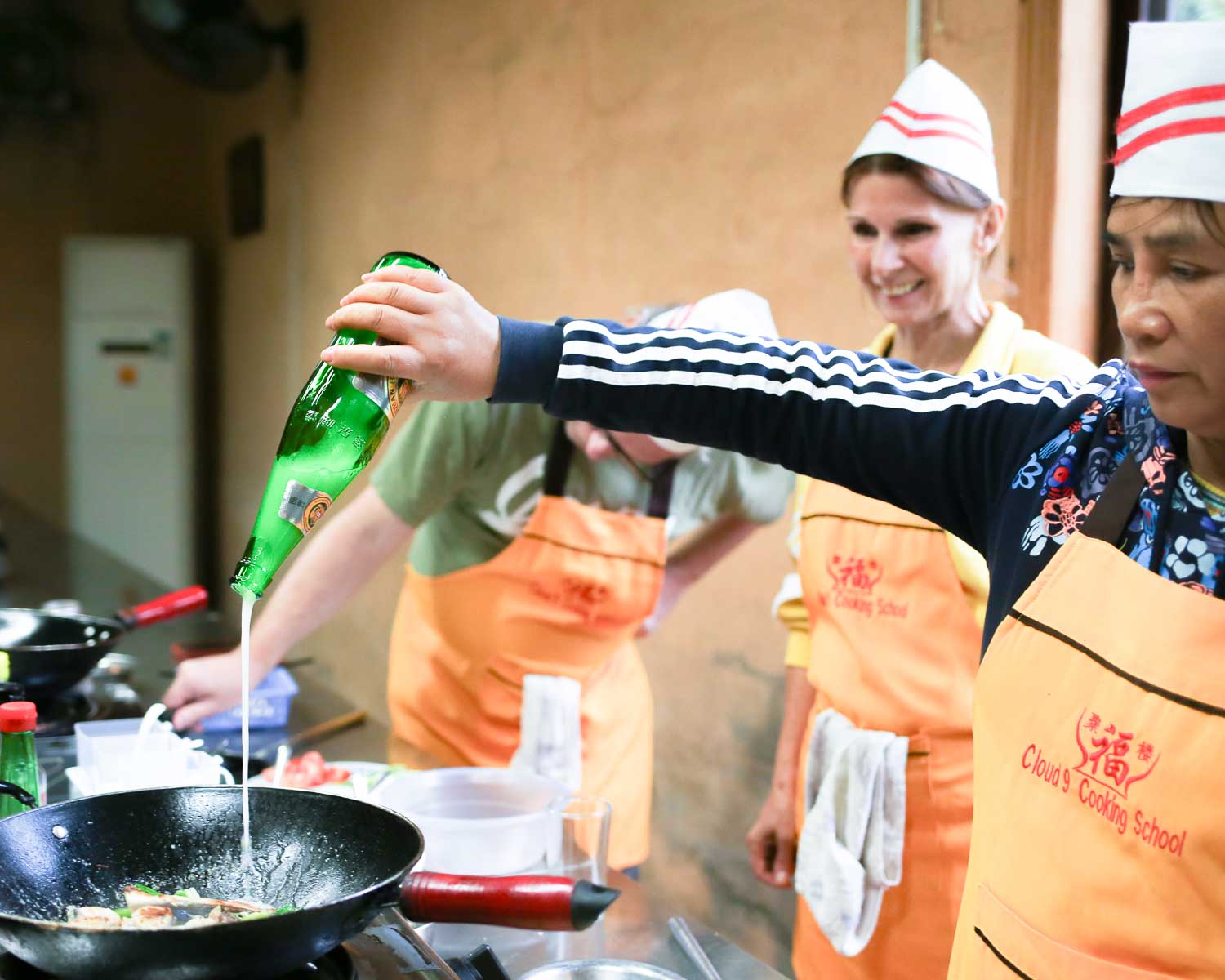
One of the most unforgettable meals on this journey doesn’t happen in a restaurant at all. Instead, we visited a local family who spent two days preparing a whole table of stuffed dishes just for us. Everything here is filled by hand: river snails packed with minced pork, garlic, herbs, and crunchy water chestnuts that add a gentle snap; eggplants hollowed and stuffed until they’re practically bursting; tofu turned into tender parcels hiding savory secrets. Even local bitter melon and peppers are transformed into small edible sculptures.
More than a meal, it feels like being welcomed into someone’s family celebration, as if you’ve earned a seat at the table through curiosity alone.


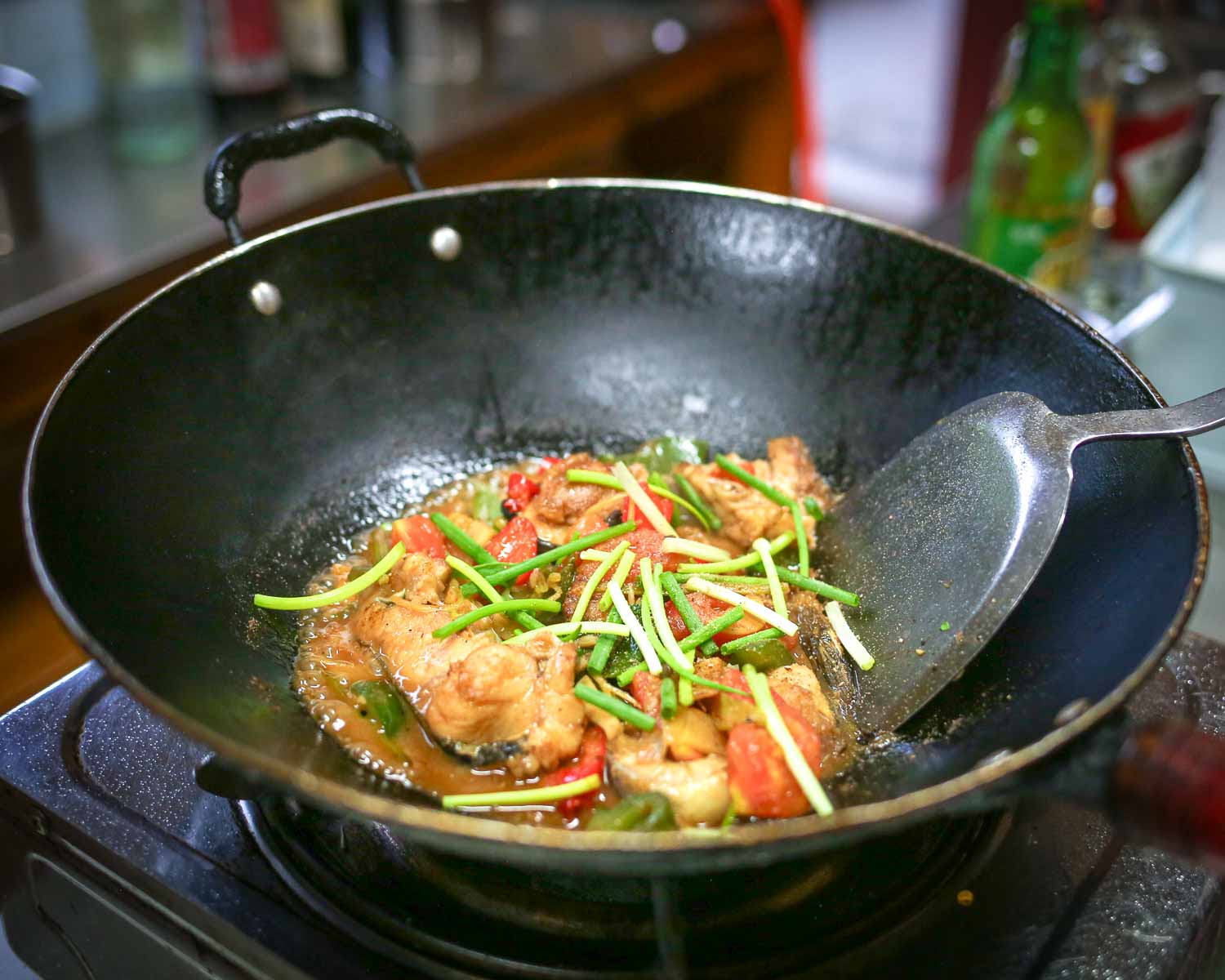
And then there’s the region’s crown jewel: beer fish. We head to a small, award-winning riverside kitchen where the chef cooks fish caught that morning. He fries each carp until the skin is crisp and golden, then lets it simmer with local beer, tomatoes, ginger, and chilies until the sauce becomes glossy and deep. Dinner becomes a love letter to the Li River itself.
I’ve always felt the best trips don’t shout; they whisper. They reveal themselves slowly, like the early fog rolling off the rice paddies at dawn.
This Guilin & Yangshuo journey isn’t the one from glossy brochures or big group itineraries. There’s no rush to see “everything.” Instead, it’s about waking up to rooster calls echoing between the hills, getting a wave from a farmer balancing bamboo baskets, sharing a laugh with an auntie teaching you how to fold eggplant (and failing, gloriously).
At night, I sit outside and watch the moonlight spill across the limestone peaks, thinking how every small encounter felt like a gentle invitation to stay present. No schedules to chase, no boxes to tick. Just moments that feel as real as the earth under your feet.
This trip is for travelers who believe that real adventure doesn’t have to be loud. It can be slow, soulful, and surprising in ways you can’t plan.
With Lost Plate, we’ve woven this multi-day trip to show you a side of Guilin & Yangshuo that most visitors never touch. From wild caves to riverside feasts and family kitchens, each day peels back another layer of this stunning corner of China.
Because the real story of this place doesn’t live on postcards. It drifts in the morning mist, winds along quiet roads, and gathers around a table where strangers become friends.

In the spring of 2020, the world slowed down, but my mind did not. Like so many others in China’s travel industry, Lost Plate’s food tours came to a sudden halt when the pandemic closed borders. With no international guests, no tours, and no idea when things would return to normal, I found myself asking the same question as everyone else: what now?

Some meals are about flavors. Others are about memory. And sometimes, if you’re lucky, a meal becomes a doorway into someone else’s world, where stories and laughter matter just as much as the food on the plate. That’s exactly what I found in a small village outside Yangshuo, where I sat down to one of the most unforgettable meals of my life. But this wasn’t a restaurant in the usual sense. It was someone’s actual home.
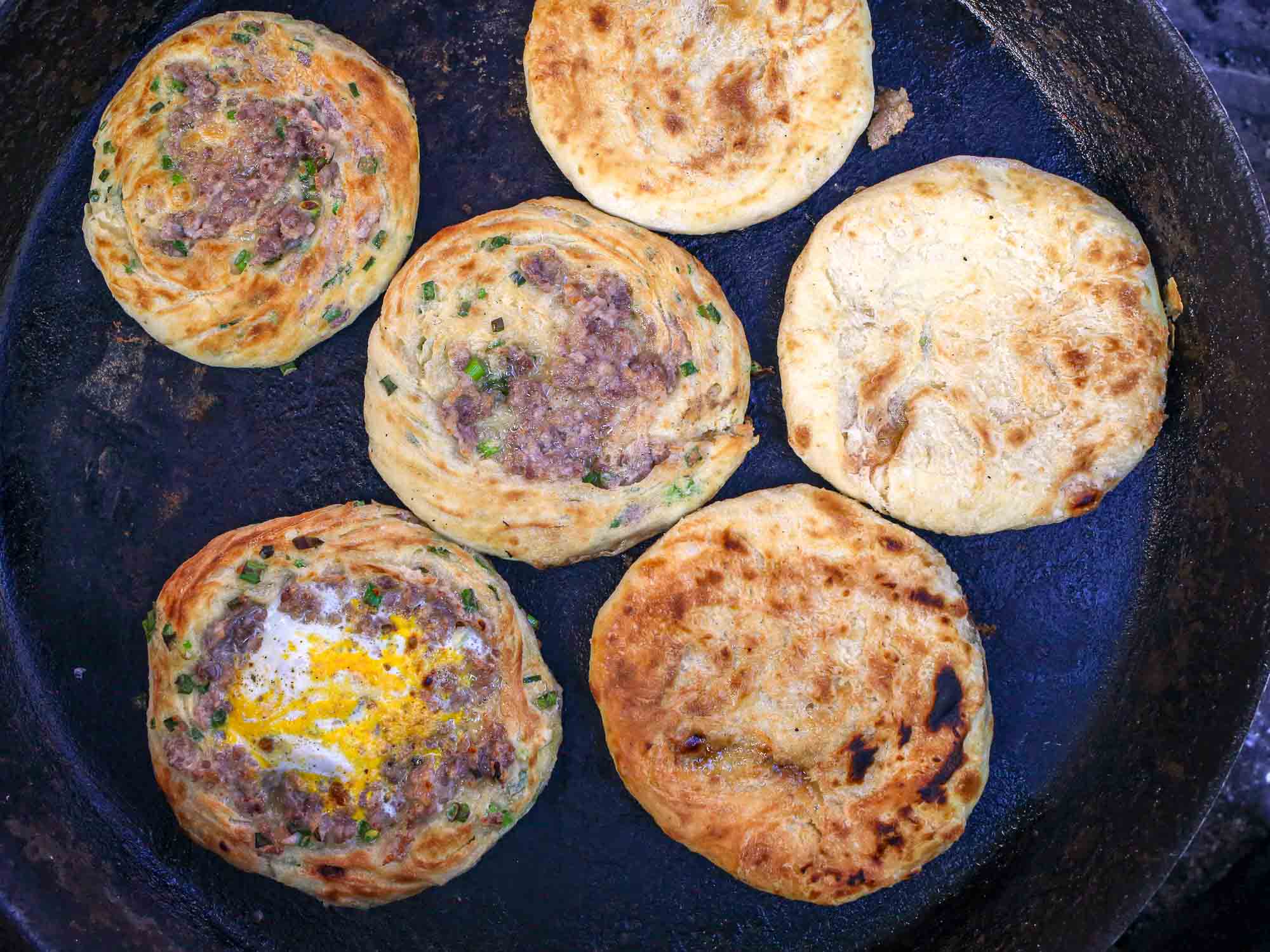
In the heart of Xizhou, a small town by Yunnan’s Erhai Lake, the scent of baking bread drifts through the air. Inside a modest, flour-dusted bakery, Mr. and Mrs. Yang stand over a charcoal-fired oven, their hands moving with quiet precision – just as generations before them have done. This is the home of a century-old tradition: Xizhou Baba.
You know the drill. Cookies store and/or access your device information so we can process data such as browsing behavior. Not consenting may adversely affect your experience while using this site.