Staying Connected in China: VPNs, Data, Apps & Power Tips for Travelers in 2026
Whether you're trying to stream your favorite shows, access Google Maps, or simply keep in touch with friends and family back home, having the right VPN, data plan, and essential apps is key. With the internet landscape in China being a bit different from what you’re used to, knowing how to get online and stay connected is a must. In this guide, we’ll break down everything you need to know to ensure you’re never without a Wi-Fi signal or lost in translation. Let’s dive in!
What is a VPN, and why do you need one in China?
A virtual private network (VPN) allows your device to appear as though it's located elsewhere, effectively bypassing China’s Great Firewall. This enables you to access many popular Western websites and services that are otherwise blocked, including Google platforms like Gmail and Google Maps, as well as social media sites such as Facebook, Instagram, YouTube, TikTok, and Twitter. Setting up a VPN before you arrive in China is essential, as it's nearly impossible to do so once you're there.
For tourists, Let’sVPN is one of the best options, offering affordable short-term plans with a stable connection. Plus, you can get an extended free trial by using our referral link to sign up.
If you're planning to stay longer in China, AstrillVPN is the most commonly used choice among long-term visitors and expats. It’s known for being simple, reliable, and stable, but it can be expensive for tourists since they don't offer short-term plans.
Quick Tip: If you use your international data roaming plan, you can bypass the Great Firewall and won’t need a VPN while roaming. Just keep in mind that this doesn't apply when using Wi-Fi networks in China.
Mobile Plans & Data
Obtaining a local SIM card is not recommended for tourists. It is technically possible, but the process is complicated and local telecom shops will not have English-speaking staff. Some airports have “tourist sim” shops that are easier but expensive.
Many travelers decide to use their international roaming plan with their existing SIM card (which bypasses the Great Firewall), but that can get quite expensive. If your phone is capable of installing an e-SIM, we recommend purchasing an e-SIM package for your trip.
We recommend our guests purchase this eSIM from Trip.com when traveling to China, and the feedback has been consistently great.
It works across 10 Asia countries with 5G speed, and you can select the duration and amount of data you’d like to have. Prices start for as little as 25 cents per day.
We recommend our guests purchase this eSIM from Trip.com when traveling to China, and the feedback has been consistently great.
It works across 10 Asia countries with 5G speed, and you can select the duration and amount of data you’d like to have. Prices start for as little as 25 cents per day.
Essential Apps
In China, international credit cards are rarely accepted, and not all ATMs accept foreign cards. However, mobile wallets are the preferred payment method for almost all merchants in China, so setting up one of these apps before you arrive is highly recommended.
Both Alipay and WeChat are accepted by all merchants, so it’s not strictly necessary to have both. However, we recommend signing up for at least one of them before you arrive for smooth travels. To set up either app, you'll need your non-Chinese phone number, passport, and an international bank card.
Power Plugs & Sockets
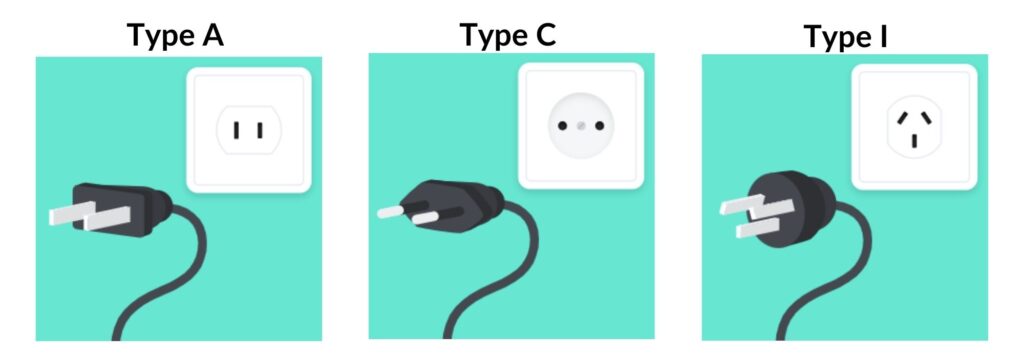
In China, you'll encounter a mix of plug types, including A, C, and I. Plug type A is the most common, but keep in mind it will only fit two-pronged American devices—three-pronged devices or those with one wider prong won’t fit. Plug type C is the European-style plug with two round pins, while plug type I features three flat prongs arranged in a triangular pattern. To ensure compatibility with the different outlets you may encounter, it’s advisable to bring a universal travel adapter that can fit all these types.
Voltage Considerations
China operates on a 220V voltage system, which is compatible with most everyday electronics like phone chargers. However, larger devices—like hair dryers or electric shavers—might need a voltage converter to avoid damage. If you're planning to bring these larger appliances, make sure your adapter includes a voltage converter to handle the 220V power supply.